• Have you tried out dark mode?! Scroll to the bottom of any page to find a sun or moon icon to turn dark mode on or off!

diy solar

diy solar

Van Life - Sleeping Above / Near Batteries Inverter etc

Rocksnsalt

Solar Kook Newb
Joined
Dec 28, 2020
Messages
1,602
Location
SoCal
Hello, this may sound kooky / cra cra to some… but intuitively it just seems like a bad idea to sleep directly above or near a LifeP04 battery bank and inverter etc.
Many vans and rvs are built with the electrical system in the “garage area” directly below the bed, along either side wall of the van. My garage will also have mountain bikes in it, and I want to be able to access it from the frontal “living space” area, so installing the system laterally across the van is not an option.
A Small system like 100-200ah would probably be a minimal health risk but larger system like 400ah or 5kw or 10kw+ seems like the chances of a negative health consequence would increase.
One solution is to mount the batteries under the vehicle, which also saves precious space in the van, but it’s more expense, fabrication, work, and not ideal in cold weather camping.

Any health consequences would likely not show up immediately but possibly months or more likely years later.
Any MD’s or other medical professionals out there with thoughts on this?
 
Last edited:
I didn't see you mention what battery chemistry?

Lead acid batteries tend to put out hydrogen gas (unless they're sealed)...

I wouldn't think LiFePO4 would be any problem, they don't even have risk for thermo-runaway or anything related to fire or meltdown, I would think they are fine to put anywhere convenient.

If I had one of the lithium - cobalt chemistries, I might be a little more concerned about having a fire escape strategy though.
 
I didn't see you mention what battery chemistry?

Lead acid batteries tend to put out hydrogen gas (unless they're sealed)...

I wouldn't think LiFePO4 would be any problem, they don't even have risk for thermo-runaway or anything related to fire or meltdown, I would think they are fine to put anywhere convenient.

If I had one of the lithium - cobalt chemistries, I might be a little more concerned about having a fire escape strategy though.
DOH! My error for omitting. ??‍♂️
LifeP04.
I added that to my post thanks
 
Well I couldn't speak as an MD (unless you consider Mechanical Donovan as some type of credential)...
 
LiFePo4 is safe enough for RV use, we have been running a 240ah pack under our bed for 3 years, it is fused on the stud and is enclosed with ventilation ports to reduce heat.

I'm am upgrading our system to 608ah as soon as the new cells arrive and have not issues with using the previous pack off-road

As far as i know there aren't any health issues, i dear say that our phones cause more issues than a battery pack.

but i'm not a doctor, nor does it concern me, i'm more likey to be killed by a road accident
 
Like I said, health issues wouldn’t necessarily occur soon, it would likely be years later after repeated exposure near the brain. And I agree re cell/smart phones.

admin: please feel free to close this thread, I don’t see a way for me to do it.
 
Yeah, thats what farmers said about roundup 40 years ago…

different since it’s an actual airborne chemical yes, but just sayin’
 
The controversy over cell phones and health risk had more to do with microwave RFs in close proximity to the body (mainly implied on the tx I assume).

Some might argue that low voltage EM energy could actually help health...


Many more articles, my Mother swears by this type of therapy, and says it can help heal the body. Companies actually make devices like belts and pads and stuff that can be fastened to the body which are supposed to help certain health issues.

I am not pro or anti on any of this topic, but just putting it out there for consideration.

I would think that as long as the battery bank isn't emitting any kind of harmful gases, or leeching chemicals from the materials they are made out of into the air, then any effects related to EM energy coming off of them would at least be harmless (speaking of the battery bank circuit voltage, not necessarily inverters or any other device in a system which could generate high-frequency noise into the localized airspace)...
 
Last edited:
We have had batteries a long time, and many other chemicals that are no longer permitted to be used in the USA.

but back to batteries….
Until very recent years there was not a whole sub segment of the population in some cases sleeping with their brain and other organs a foot or 2 away from a massive LifeP04 battery bank, inverter etc.

But anyway no need to respond anymore I’ve asked admin to delete this thread.
 
But anyway no need to respond anymore I’ve asked admin to delete this thread.
Why? It is actually a valid discussion. I'm sitting 5" above 5.2kWh of LiFePO₄ batteries and a solar charge controller, and my back is 6" from my 2kW inverter (though it's not on at the moment) as I type this.
 
The controversy over cell phones and health risk had more to do with microwave RFs in close proximity to the body (mainly implied on the tx I assume).

Some might argue that low voltage EM energy could actually help health...


Many more articles, my Mother swears by this type of therapy, and says it can help heal the body. Companies actually make devices like belts and pads and stuff that can be fastened to the body which are supposed to help certain health issues.

I am not pro or anti on any of this topic, but just putting it out there for consideration.

I would think that as long as the battery bank isn't emitting any kind of harmful gases, or leeching chemicals from the materials they are made out of into the air, then any effects related to EM energy coming off of them would at least be harmless (speaking of the battery bank circuit voltage, not necessarily inverters or any other device in a system which could generate high-frequency noise into the localized airspace)...
Hehe, that means I'm living in EM paradise. With everything I have humming running around me, I might even glow in the dark. :eek:
 
Caution when it comes to health and environmental impacts is reasonable and prudent. As you have alluded to, there is sometimes a long lag of years or decades before we come to understand the implications of some new thing. At the same time its probably not productive to let vague/undefined fears dominate your thinking, without trying to untangle and develop what is and what is not realistic/possible, and what vectors for harm may or may not exist.

With LiFePO4 for example you are talking about 'actual airborne chemicals' but my understanding (as a layman) is that unless something goes very wrong (which would require multiple simultaneous failures in a well designed system), there is no venting with LiFePO4 batteries. There should be no 'actual airborne chemicals.'

That said, there is absolutely nothing wrong with erring on the side of caution, its a smart approach given limited information, if there is one thing we do in abundance on this forum, its overbuild+overthink. If you are worried about the potential for venting, you could build a battery enclosure that vents to the outside or is sealed in some way, and/or make sure there is adequate air exchange/ventilation in the living space (this is a good idea regardless).

The TL;DR is try to define the specific risks/worries then assess each of those individually rather than focusing on an amorphous idea of possible harm.
 
@Dzl Well said, and good job covering both sides of the argument, you'd make a good politician, chuckle, teasing, okay, I find humor, after the light of day, to be the best antiseptic.
That being said, I've survived the game of life for 69 going on 70 years now. Heck, we used to hunt dinosaurs for food back in the days, and I can comfortably say that batteries and inverters are the least of your worries. I'm much more concerned about what's in our food, air, and water; as for EM, at the speed of light, we're 8-minutes away from our sun. Momma used to say, "what don't kill ya makes ya stronger." :cool:
 
Caution when it comes to health and environmental impacts is reasonable and prudent. As you have alluded to, there is sometimes a long lag of years or decades before we come to understand the implications of some new thing. At the same time its probably not productive to let vague/undefined fears dominate your thinking, without trying to untangle and develop what is and what is not realistic/possible, and what vectors for harm may or may not exist.

With LiFePO4 for example you are talking about 'actual airborne chemicals' but my understanding (as a layman) is that unless something goes very wrong (which would require multiple simultaneous failures in a well designed system), there is no venting with LiFePO4 batteries. There should be no 'actual airborne chemicals.'

That said, there is absolutely nothing wrong with erring on the side of caution, its a smart approach given limited information, if there is one thing we do in abundance on this forum, its overbuild+overthink. If you are worried about the potential for venting, you could build a battery enclosure that vents to the outside or is sealed in some way, and/or make sure there is adequate air exchange/ventilation in the living space (this is a good idea regardless).

The TL;DR is try to define the specific risks/worries then assess each of those individually rather than focusing on an amorphous idea of possible harm.
Some valid points and acknowledgments.
Re airborne chemicals I was talking about roundup.
I wouldn’t be concerned about ingesting chemicals from LifeP04 batteries or an inverter unless there was a meltdown or fire.
My point is more about longterm exposure from sleeping with ones brain and vital organs in close proximity to relatively high power electrical storage and devices.
We don’t really know if there’s any effect since there likely hasn’t been any studies specific to this.
Don't get me wrong… I’m not stressing on this question at all, just something that popped into my add brain recently so I thought I’d throw it out here, which in hindsight was not the best type of platform for this question.

That said…
Admin, PLEASE delete this thread.
Thanks
 
Last edited:
Re airborne chemicals I was talking about roundup.
My mistake, I totally misread/misinterpreted that comment.

My point is more about longterm exposure from sleeping with ones brain and vital organs in close proximity to relatively high power electrical storage and devices.
We don’t really know if there’s any effect since there likely hasn’t been any studies specific to this.
One possible strategy you could take if you want to be cautious (which has other benefits as well), is turning off the inverter, or better yet, only turning the inverter on when you need it. This is somewhat common as a power saving measure already.

Don't get me wrong… I’m not stressing on this question at all, just something that popped into my add brain recently so I thought I’d throw it out here, which in hindsight was not the best type of platform for this question.
Actually I think its a pretty valid question/topic for a forum like this. Since as you mention, many more people today are sleeping in close proximity to their electrical systems, I imagine you are not the only one who has pondered the health and safety considerations. As to deleting the thread, we don't normally do that with established/active conversations without a clear reason if there is interest in the topic. If you would like to no longer participate there is a little 'unwatch' button in the top right, or feel free to PM me or another moderator privately (or report the post with the reason for deletion stated in your report) if you think there is good reason to delete the whole thread.
 
My mistake, I totally misread/misinterpreted that comment.


One possible strategy you could take if you want to be cautious (which has other benefits as well), is turning off the inverter, or better yet, only turning the inverter on when you need it. This is somewhat common as a power saving measure already.


Actually I think its a pretty valid question/topic for a forum like this. Since as you mention, many more people today are sleeping in close proximity to their electrical systems, I imagine you are not the only one who has pondered the health and safety considerations. As to deleting the thread, we don't normally do that with established/active conversations without a clear reason if there is interest in the topic. If you would like to no longer participate there is a little 'unwatch' button in the top right, or feel free to PM me or another moderator privately (or report the post with the reason for deletion stated in your report) if you think there is good reason to delete the whole thread.
Right….
Yes thought of shutoff etc but ideally looking at being able to possibly power ac or heat at night.

thanks I guess just let the thread ride and we’ll see what dipstickery comes of it, and hopefully some good info as well.

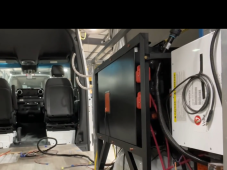
btw here’s a pic of the VOLTA 12kw system that is used in the Storyteller Mode Vans.
it’s on the right in both pics, bare, and enclosed.
The battery system is stored on the passenger side over the wheel well.
In their layout either the occupants feet or head are directly above the 48v 12kw battery bank etc. when sleeping.
For most, that will depend on how level the parking area is.

I’d love to have one of those vans but just a bit pricey…

So I’d love to be able to diy a similar - but simpler system someday in my sprinter, using EG4 batteries or similar.
Theirs has elaborate controls, 11” led screen etc.
 

Attachments

  • 4E888BB6-CFB0-4CF9-B365-624EB5F4387C.png
    4E888BB6-CFB0-4CF9-B365-624EB5F4387C.png
    1.2 MB · Views: 30
  • C31B7C9F-78FC-4C4E-B700-2619138FAA0A.jpeg
    C31B7C9F-78FC-4C4E-B700-2619138FAA0A.jpeg
    1.3 MB · Views: 29
  • 5200D8E0-F05F-49E9-A7EF-AD65FB021FD3.png
    5200D8E0-F05F-49E9-A7EF-AD65FB021FD3.png
    1.2 MB · Views: 28
Last edited:
I'd be more wary of the inverter moreso than the batteries, especially transformer based units. By their very nature, they create strong (relatively) EM fields. My inverter is a low frequency unit with a 45lb transformer in it, and it buries the needle of my Trifield T2 em/ef/rf meter within 4 feet or so. Strong magnetic fields have been linked to detrimental physiological phenomea, but generally when there are two or more EM fields which are operating in the same area, from what I've read. You might find a little research into what are known as "kreb houses" interesting, where certain houses were studied (in Germany in particular of I'm not mistaken) which had an uncanny history of high rates of cancer and other ailments, and it was found that the common thread was that they sat over or very close to crossing veins of underground water. There was also, on a related note, research into those really twisted up, super knotty, lumpy trees you see every now and again which also found a very high correlation to crossing veins of underground water, which carry electromagnetic energy (which is, I'm pretty certain, why dowsing works). I used to live in a house that way back in the yard had one of those trees, and whenever I went over and spent any amount of time next to it, I'd always feel a little nauseous...that's what got me looking into the whole matter to begin with.


especially transformer based units. By their very nature, they create strong (relatively) EM fields. My inverter is a low frequency unit with a 45lb transformer in it, and it buries the needle of my Trifield T2 em/ef/rf meter within 4 feet or so.
So then we should ask the question: is the strength of the emf you speak - of which proximity is probably not 24/7 in most circumstances- or is it a continuous exposure that would create a risk?

Between cell phones, radio, tv, data transmission, air lane monitoring, gps, wifi, alarms, power lines….. we are continually immersed in a soup bath of radiation every second of the day.
 
So then we should ask the question: is the strength of the emf you speak - of which proximity is probably not 24/7 in most circumstances- or is it a continuous exposure that would create a risk?
Good question. I get the impression that, from what I've read, two emf wherein one is not significantly stronger than the other and are "travelling" in sufficiently oppositional directions, can create a twisted and entangled (for lack of a better phrase) field which could complicate things for cellular growth. I would put this impression a hair or two above conjecture though, all in all. I found the em energy that underground veins of water carry to be very interesting in correlation to various phenomena in the natural world, such as bee navigation and how a queen bee selects where the nest will be. The aforementioned dowsing is another example...when I first moved up to my now land 12 years ago, I was referred to an old timer frenchman farmer who was the go to dowser for people looking for where to place their well, and as he was right down the road, I asked if he would do that service for me, which he did. And water he found (granted, not a difficult feat in the Maine mountains, but I watched the stick rotate in his very loose grip). The funny thing that stuck out in my mind was that he couldn't wear watches with quartz piezo action, they just would stop working within a short amount of time. Surely related to his sensitivity to em, I've always thought.

Yes, we are bathed in a sea of varying frequencies of energy from sound and light waves, to rf, ef, emf, etc etc. Also, cancer rates and all manner of other ailments, especially neurological and psychological, seemed to have ramped up tremendously over the decades. Maybe it's a coincidence, maybe not... If I had to wager though, I'd hazard it's an aggregate to the problem, alongside unwise farming practices, preservatives, fallout from the plastic age, etc.

I'd go get a emf/rf meter though... It's pretty interesting to measure things and see what strengths and field areas are generated by everyday objects. I'm a sucker for meters of all sorts then again...I've got a lot of apogee gear to measure specific photon flux densities from different sources. In assessing the strength of any given field to health risks, I'm afraid there's very little consensus in the scientific community (units we are talking really obvious cause and effect in short term exposure, which we aren't) rendering your actual question unanswerable by me. It's trial and error, observation and note taking in the longitudinal by people like myself and other interested amateurs. And like my farmer friend, some people just seem to be more sensitive to it than others, so it stands to reason that some people would be more adversely effected than others.
 
cancer rates and all manner of other ailments, especially neurological and psychological, seemed to have ramped up tremendously over the decades. Maybe it's a coincidence, maybe not... If I had to wager though, I'd hazard it's an aggregate to the problem, alongside unwise farming practices, preservatives, fallout from the plastic age
There’s probably a lot of correlation to several of the issues you mentioned as well as some that you didn’t. However, the psychology component I don’t think correlates is readily within those causations.

The increasing incidences of mental health issues within various groups probably doesn’t correlate in my opinion because of two primary factors: societal affectation and cultural nuances.

Just as people glom onto personal electronic devices partly due to societal pressures, Jack the Ripper had copycats, school bomb threats occur in patterns, “mass shooters” going on sprees, and waves of criminal ‘demonstrations’ occur as they are given media attention, the culture has created a familiarity within our societies of various (formerly rare) mental health disorders to where individuals ’recognize’ a symptom because they relate to it and even if a genuine illness they affect the symptomology readily. Whereas in past generations individuals had similar mental health issues but most moved past them in time. Today something like 95% of people have at least one mental health event in their lives. Past generations probably had similar percentages as well - with far fewer in the past developing long-term disability within society because society expected them to recover and victims believed they could and would recover.

The cultural nuances are the disproportionate number of cases in some contemporary cultures compared to the low occurrence in other otherwise very similar cultures elsewhere. Populations are not effected equally across similar cultures. Poor, rich, ethnicities, region- it seems random without incorporating cultural anthropology.

In developed countries the background emf is pretty much the same worldwide. So my possibly naive conclusion is that emf can’t specifically be a cause for psychological issues.
 
I'd take into account the noise from your inverter. Granted it might not sound like much during the day. But at night when you want it silent may be another matter. Our's is in the closet next to the bed. I ended up adding sound damping material to the inside closet doors and that all but eliminated the sound.

https://amzn.to/3qWbzea
 
I worry about the AC equipment. Those electric fields change at 60Hz around here and can induce currents in nearby objects.
DC electrical storage is just a chemical reaction, and happens naturally in the environment. (usually leading to corrosion)

Any offgassing from the chemistry of charging/discharging a battery should be addressed. LiPO4 has minimal off gassing and gasses shouldn't build up because there is enough air exchange happening by opening doors and windows every few hours, or so.

I don't like to sleep with my inverter running, the hum may cause sleep issues, and the EM field could be bad on some level. Besides, I'm done watching TV/ surfing internet, and it's dark outside, so inside doesn't heat up much with the windows/vents open. (see battery offgassing remedies)

Fire is more of a worry for me when I go to bed. (And bugs, too!)
 
Caution when it comes to health and environmental impacts is reasonable and prudent. As you have alluded to, there is sometimes a long lag of years or decades before we come to understand the implications of some new thing. At the same time its probably not productive to let vague/undefined fears dominate your thinking, without trying to untangle and develop what is and what is not realistic/possible, and what vectors for harm may or may not exist.

With LiFePO4 for example you are talking about 'actual airborne chemicals' but my understanding (as a layman) is that unless something goes very wrong (which would require multiple simultaneous failures in a well designed system), there is no venting with LiFePO4 batteries. There should be no 'actual airborne chemicals.'

That said, there is absolutely nothing wrong with erring on the side of caution, its a smart approach given limited information, if there is one thing we do in abundance on this forum, its overbuild+overthink. If you are worried about the potential for venting, you could build a battery enclosure that vents to the outside or is sealed in some way, and/or make sure there is adequate air exchange/ventilation in the living space (this is a good idea regardless).

The TL;DR is try to define the specific risks/worries then assess each of those individually rather than focusing on an amorphous idea of possible harm.
In a recent Fully charged show a battery recycling firm owner claims that he can smell they different manufacturers of batteries:


It's around minute 7.
LiFePO4 should have zero off gassing.
While that is true - even the plastic case off-gasses. I mean the cells are swelling and contracting.

One of the reasons I buy marine grade batteries (Chins, Amperetime etc.) - in air/water tight cases vs server rack batteries - is that I'm living a high humidity environment - and I'm more concerned about corroding the cells and connection between them. But now I'm also glad that potential off gassing is reduced.
 
Yes, we are bathed in a sea of varying frequencies of energy from sound and light waves, to rf, ef, emf, etc etc. Also, cancer rates and all manner of other ailments, especially neurological and psychological, seemed to have ramped up tremendously over the decades. Maybe it's a coincidence, maybe not... If I had to wager though, I'd hazard it's an aggregate to the problem, alongside unwise farming practices, preservatives, fallout from the plastic age, etc.
I don't have any electronics in my Bedroom. Even keep filament lightbulbs in the sockets in that room.

Btw I studied electrical engineering once upon a time.
Lot's of RF issues are myths, but some are replicable in cell cultures and animal models. Which usually means - that a human is not immune from that, it just takes longer, just by sheer mass of cells to be impacted.

I don't like to sleep with my inverter running, the hum may cause sleep issues, and the EM field could be bad on some level. Besides, I'm done watching TV/ surfing internet, and it's dark outside, so inside doesn't heat up much with the windows/vents open. (see battery offgassing remedies)
I keep the inverter on in the Winter - to heat up the RV :P
 
The increasing incidences of mental health issues within various groups probably doesn’t correlate in my opinion because of two primary factors: societal affectation and cultural nuances.
Psychology is greatly influenced by biology, of course, so it would be hard for me to divorce the notion entirely. Even if relegated to ancillary or more indirect roles. The magnitude to which the issue is expressed across various cultural and geographical milieu certainly and solidly supports your points for sure.


Past generations probably had similar percentages as well - with far fewer in the past developing long-term disability within society because society expected them to recover and victims believed they could and would recover.
This right here ^^^. Though it's likely impossible to validate the very first part, the rest rings resoundingly true. We can clearly see the fallout from, without getting political, the sharply upward trend in coddling and, dare I say, decline of cuffings upside the head? It probably doesn't help that discovery of new mental health ailments are often incentivised, leading me to wonder what came first in some cases...the disease or the diagnosis. There's an old saying in the esoteric realms, "where focus goes, energy flows".

One things for certain..."Progress" (and progress too) often leaves a tangled, convoluted web in it's wake.
 
I'd take into account the noise from your inverter. Granted it might not sound like much during the day
Yup, depends on ones inverter. I have a 6kw (really a true 8kw 240v) inverter who's transformer is so well designed and wound that there is no audible hum whatsoever, which is rare for a LF unit. However, the 3 fans in it, which come on periodically even with low loads, are anything but quiet. When they first come in, it's not hard to imagine you're standing on the tarmac right next to a 747 getting ready for takeoff. Honestly, I'd be more annoyed about it if I wasn't so impressed with the sheer cfm power of these things. I swear they are as loud as my 12" vortex can-fans that I use to purify 26'x40' rooms by pulling the air through a 6' tall carbon filter. I'd imagine that would drive someone batty in an RV or tiny home. Conversely, the Samlex high freq inverters I've used, you would never even know they were on, even under nameplate rated loads.
 
Heck. Why not build yourself a faraday cage for your gear? Keeps your system's EMFs in, and protect from EMPs at the same time:) I live in a very small yurt, and am also very close to my batteries, inverter, charge controller, all with Bluetooth..... Oh, wait. Faraday cage would shut down the Bluetooth:( I guess I can always do wired monitors.
 
Hello, this may sound kooky / cra cra to some… but intuitively it just seems like a bad idea to sleep directly above or near a LifeP04 battery bank and inverter etc.

You're just being paranoid.


diy solar

diy solar
Back
Top